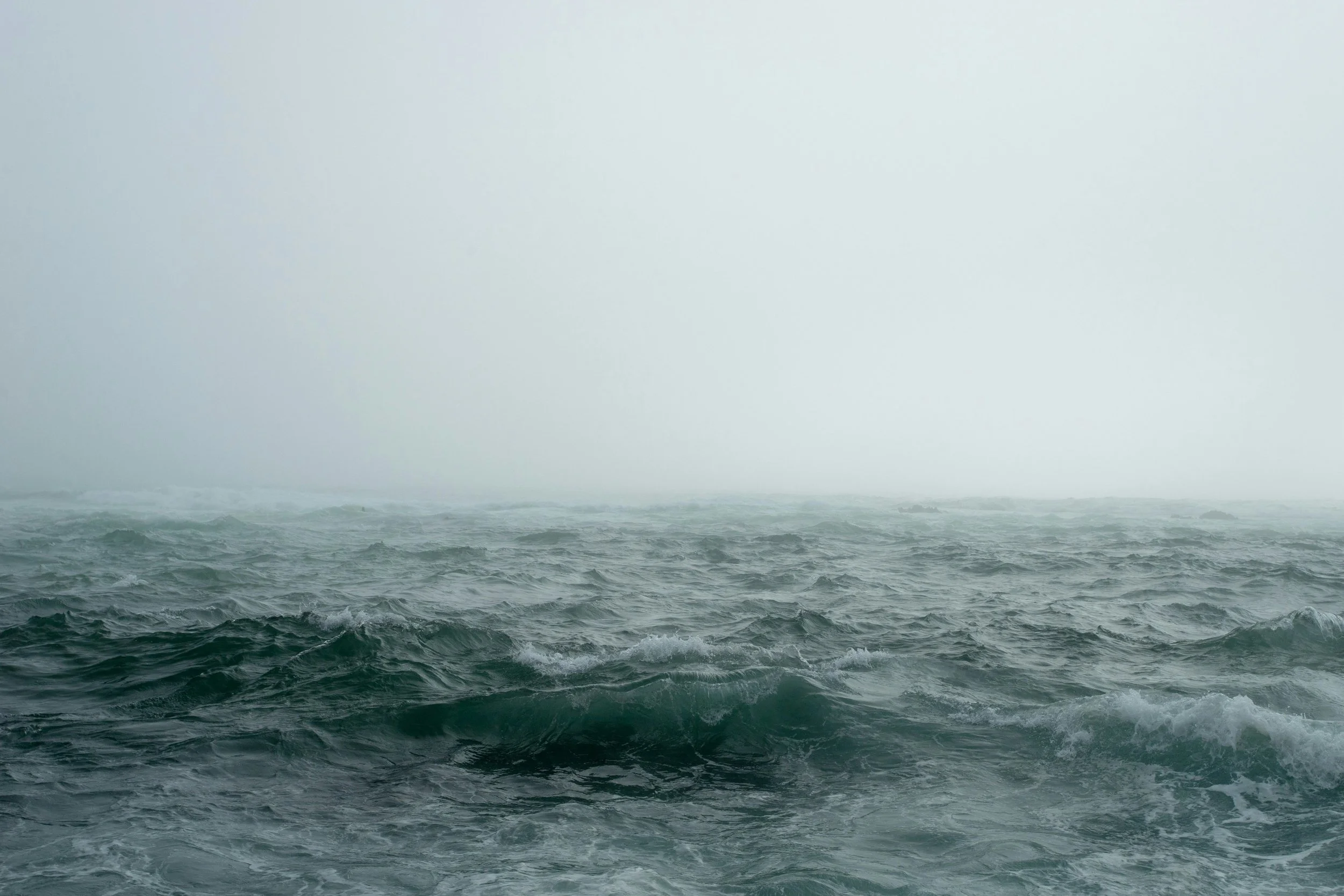
Horizon gazing
When was the last time you’ve seen the horizon?
Not a fiery, pink-hued, instagrammable sundowner - but a horizon in its purest form: a sharp, uncompromising line, maybe blue cutting into blue. Sky against surface. A limit you can see, but never reach.
My most memorable one is tied to nausea. A small whale-watching boat off the coast of Iceland, the ocean unruly, my hands gripping the railing while emptying my stomach into the North Atlantic. My father stood behind me, calm, slightly amused, repeating a single instruction: “Just look at the horizon.”
And since then? Horizons have become rare. Buildings interrupt them. Screens replace them. Even landscapes arrive pre-framed, cropped for effect. We still see sunsets - but those are about color, not distance.

The horizon is defined as the boundary between the surface of a celestial body and its sky. The word itself comes from the Greek horizōn (kuklos)—the “limiting circle.” On Earth, the visible horizon is usually distorted, refracted, obscured by terrain, buildings, trees. The true horizon (a perfect circle) exists mostly in theory, drawn on models of ideal spheres.
Under standard atmospheric conditions, standing with your eyes 1.8 meters above sea level, the horizon sits about 4.8 kilometers away. A strangely precise number for something that feels infinite…
And yet, to me, the horizon isn’t about geometry. It feels more like longing.
Like stumbling upon a cold bottle of water in a desert - not because you’re dying of thirst, but because some part of you forgot what relief feels like!
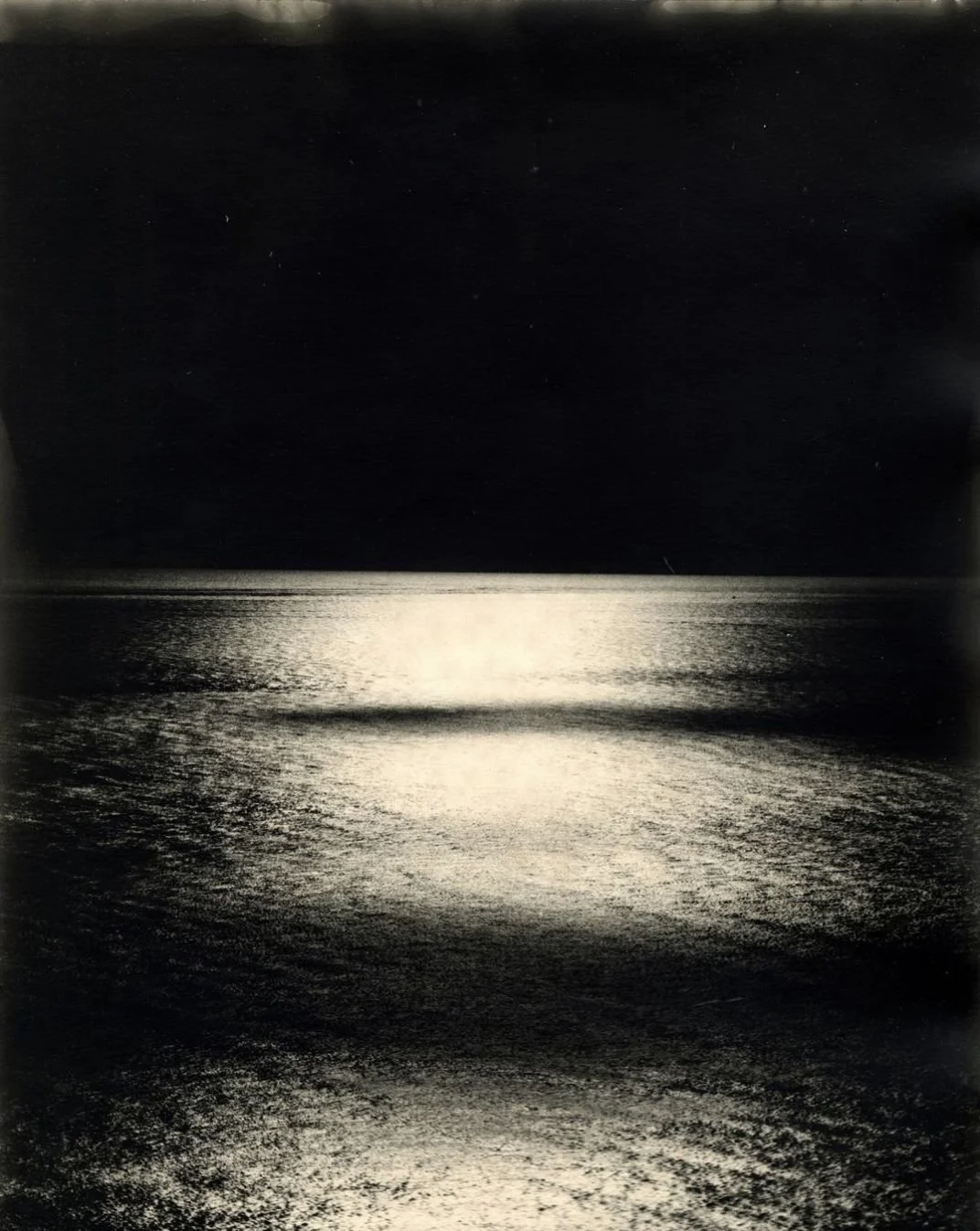
There’s a reason horizons have always carried spiritual weight. The word religion traces back to the Latin religare - to reconnect, to rebind with something greater than yourself. Awe is not a distraction from meaning, but one of its raw materials.
Reverence grows out of limitation. From this understanding - sometimes comforting, a lot of times unsettling - we feel the existence of something interiorly above us. Something even beyond our line of sight.
That’s why Orthodox Jews wear yarmulkes. Why Turkish sultans once entered Hagia Sophia wearing hats shaped like the footprint of Mohammed. Small, physical reminders that power has a ceiling. That knowing your place is not humiliation, but orientation.
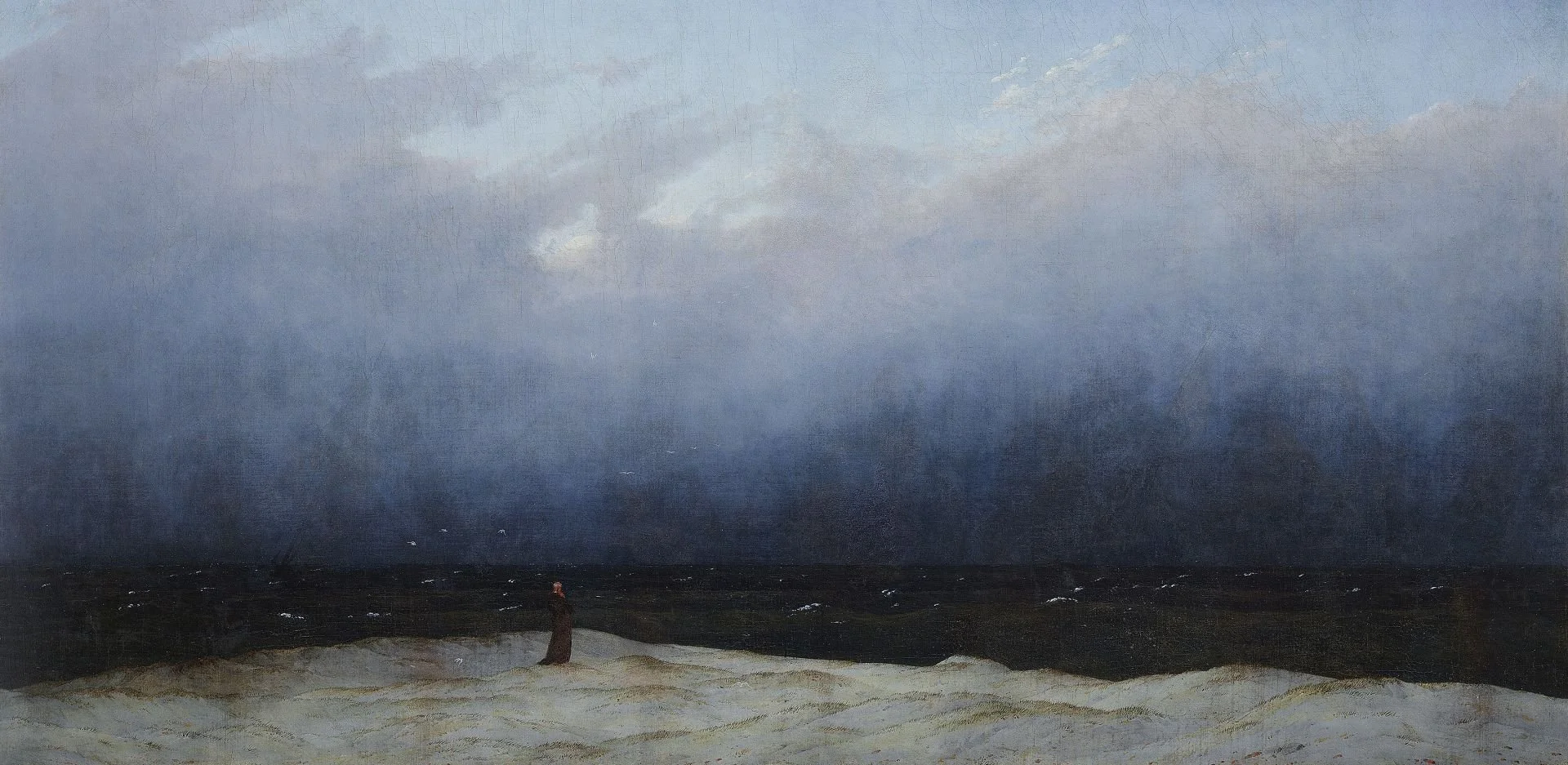
Caspar David Friedrich, I guess, understood this. His Monk by the Sea stands with his back to the viewer, gazing into a vast, undefined distance. He doesn’t dominate the landscape. He’s held by it. Reduced and enlarged at the same time.
The painting asks the question: Where do we place ourselves when the world feels bigger than us? At least that's my very unprofessional interpretation of it.
To me personally, seeing the horizon feels quite important. It introduces hope without optimism. When there’s something larger to believe in, pessimism loses its grip - not because problems disappear, but because they shrink to scale.
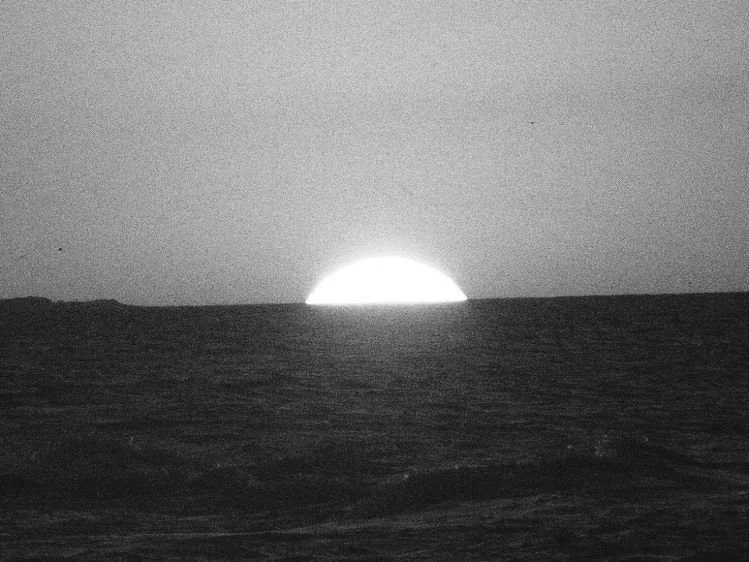
Judson Brewer, a psychiatrist and neuroscientist, points out that our emotional states are closely linked to how we use our eyes. A wide, open gaze correlates with curiosity and openness. A narrowed field of vision aligns with focus and action.
From an evolutionary perspective, this makes sense.
We evolved outdoors, in open landscapes. Standing on a hilltop or ridge, surveying the land, we feel safe because nothing can harm us, because we can see.
Contrast that with eye-level environments: dense forests, enclosed spaces. There, vision narrows. Attention sharpens. The body prepares to act.
Andrew Huberman takes this further. According to his research, panoramic vision, what we use when gazing at the horizon, actively downregulates stress responses in the brain. The eyes, after all, are extensions of the nervous system. When we expand our visual field, our brains understand - you’re not trapped. A sense of freedom maybe?
Other Studies show that broadening visual perspective increases insight during problem-solving. When you see more broadly, you think more broadly. Calm follows. So does humility.
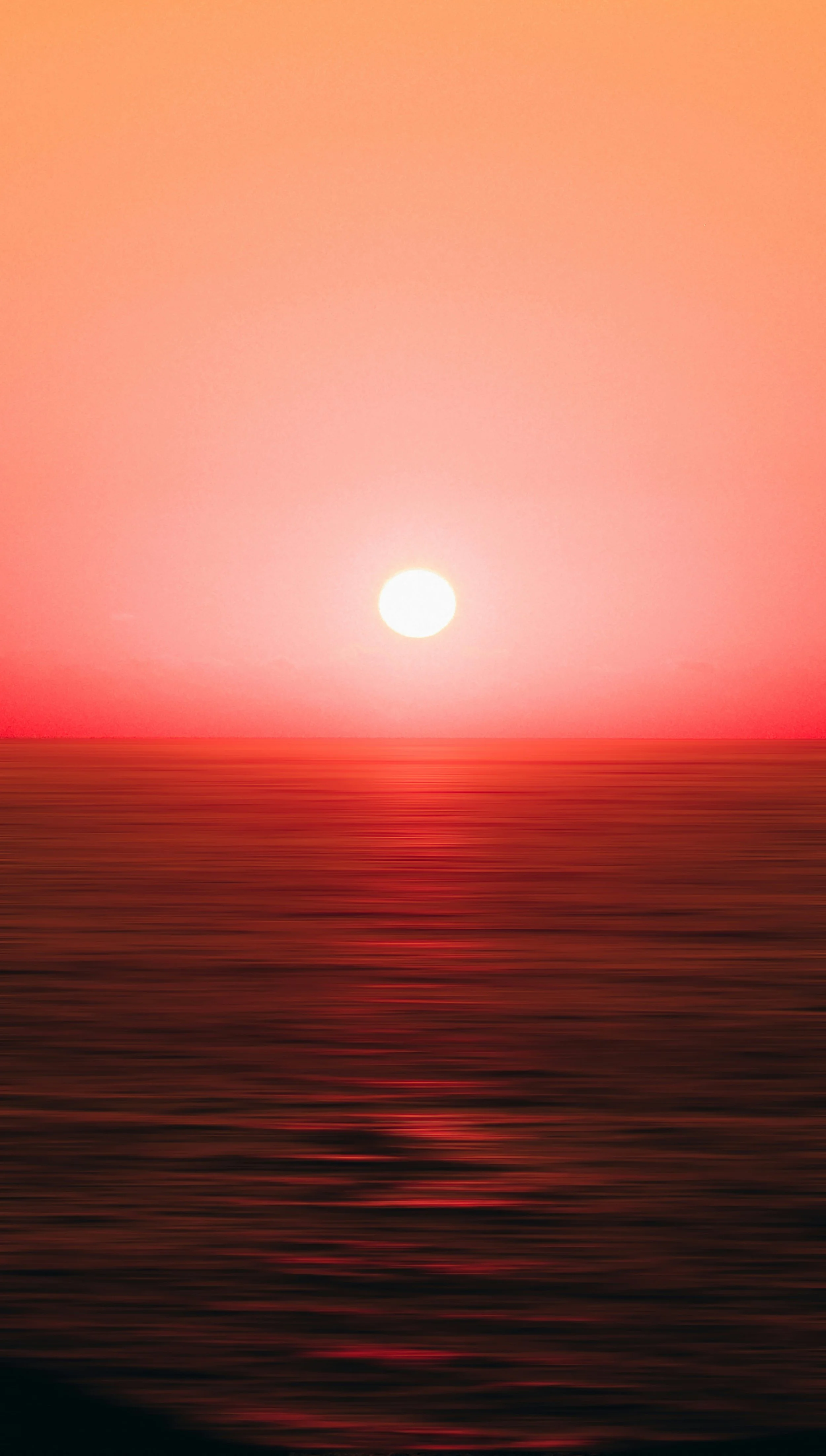
Horizons counter nearsightedness - not just optical, but existential. They pull us out of rooms, routines, and roles that tend to shrink our perception. Out from behind desks and dashboards. Out of the walls where urgency multiplies and thing feels immediate, loud, and loud.
Long views invite different questions. Bigger ones.
Modern life, however, rewards the opposite. Focused vision. Narrow bandwidth. Productivity measured in minutes and metrics. We orbit the same paths, speak to the same people, entertain the same ideas, bathed in the cadaverous light of screens. A small wedge of experience. Efficient but airless?
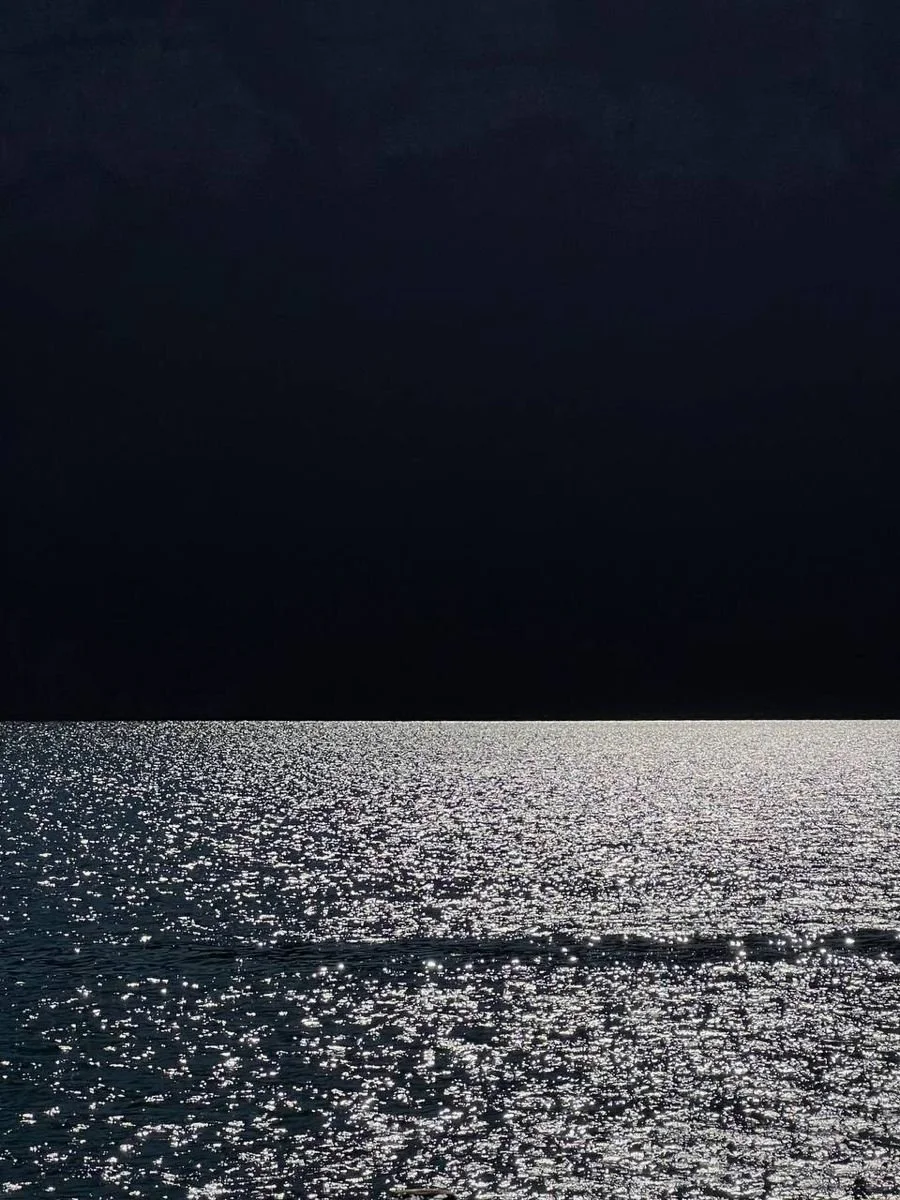
And yet, something in us resists. As Freud remarked, civilization’s primary task is to defend us against nature. But, he warned, “the human spirit hates to be cooped up and is demented by claustrophobia.”
Horizons offer expansion - with a side order of humility. They loosen the grip of what psychologist Jean Houston calls “your little local story.” Shifting you from doing to being.The universe is still expanding. So should our perspective.
Which brings me back to that boat in Iceland. The horizon gave my nervous system something stable to hold onto when everything else moved. Just a line in the distance, reminding us where we stand.
When was the last time you saw it?
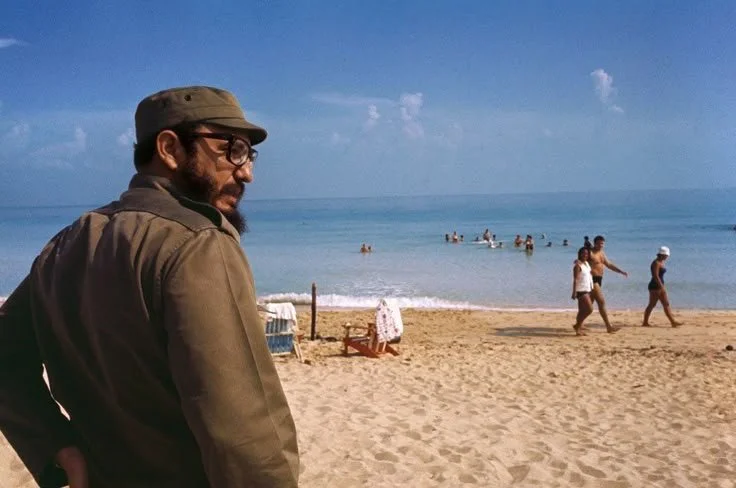
Fidel Castro - the good, the bad, the ugly
On a hot summer day in 2008, standing in Meckenheim, Germany, I first brushed up against the myth of Fidel Castro - not through a book (uninteresting back then), but via the bold red Che Guevara print on my cousin’s olive t-shirt. The bearded face, fierce and almost magnetic, seemed to radiate from the fabric - its meaning far out of reach for me (9 years old). When I asked my father about the man on the shirt, he simply said: “You are too young for revolutions.” An answer that, even now, feels like a closed door to a room filled with smoke, screams and slogans.
Fidel Castro’s journey, to me, is one of the twentieth century’s most dramatic transformations: from freedom fighter to dictator, from the promise of liberation to the reality of repression.“A revolution is a struggle to the death between the future and the past,” Castro once declared, and for a time, he seemed to embody the future.
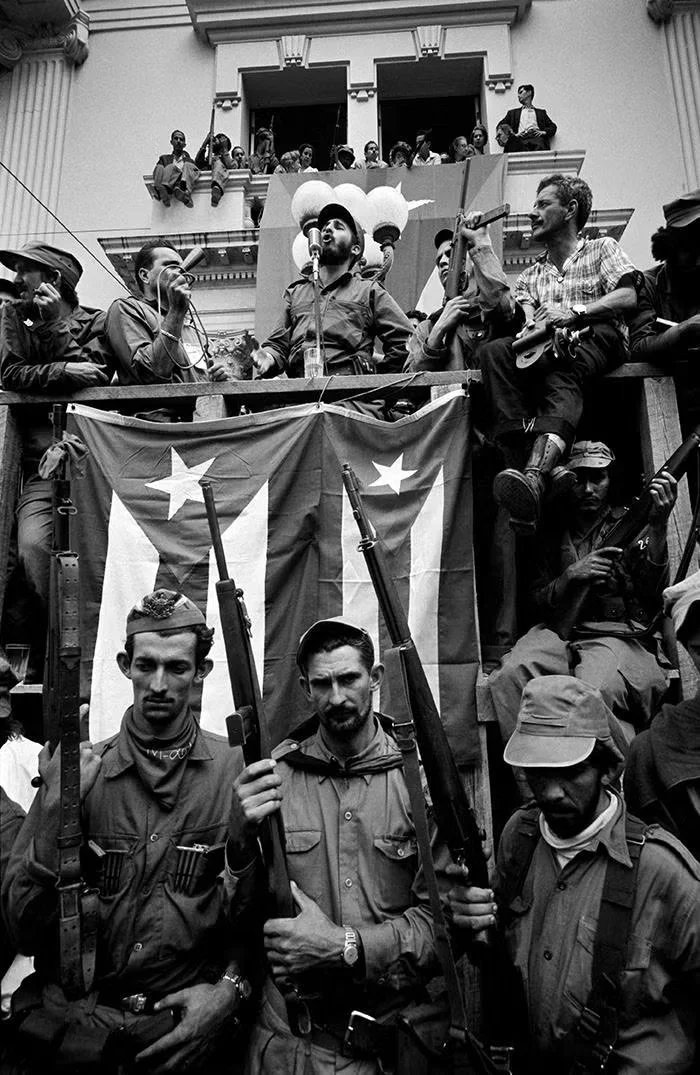
Born in 1926, Castro grew up in a Cuba riddled with inequality and ruled by the iron fist of Fulgencio Batista. As the son of a wealthy Spanish landowner and a household maid he embodied contradiction from the start - privilege mingled with injustice.
By the mid-1950s, Castro had become the face of resistance, leading a ragtag band of revolutionaries into the Sierra Maestra mountains. In 1959, their improbable victory toppled Batista’s regime, and for a fleeting moment, hope seemed to bloom across the island. Castro’s early speeches were electric, filled with the language of justice and equality. He promised land for the peasants, schools for the children, and dignity for the poor.
Abroad, Castro cast his shadow far beyond the Caribbean, lending support to anti-imperialist movements and nurturing the rise of Marxist governments in places like Chile and Nicaragua. Cuban troops, under his command, even appeared on unlikely battlefields—from the Yom Kippur War to the tangled frontlines of Angola’s civil war—increasing Cuba's profile on the world stage.To many, he was a modern David, fighting the Goliath of injustice and imperialism.
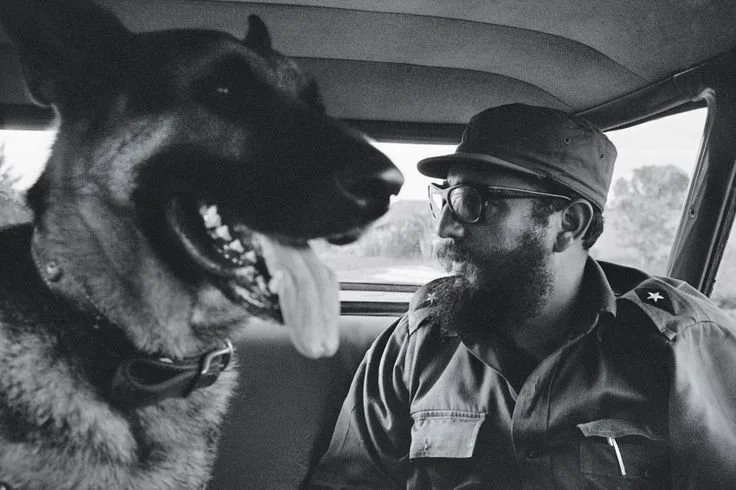
But the revolution’s turning point came swiftly. Castro consolidated power by dissolving the existing political system, suppressing opposition, and establishing a one-party state. Adopting a Marxist–Leninist model of development, Castro converted Cuba into a one-party, socialist state under Communist Party rule (the first in the Western Hemisphere). His government nationalized industries and implemented radical land reforms. Thousands of political opponents were imprisoned or exiled as censorship became the norm. Ultimately, public perception shifted: the liberator was now seen by many as a jailer - fear replaced hope. “Condemn me, it does not matter, history will absolve me,” he famously proclaimed during one of his trials on September 16th 1953 in Santiago, Cuba.
Initially the extent of Castro’s revolutionary movement was vast. His policies transformed Cuba’s political, social, and economic landscape, inspiring leftist movements worldwide. Yet, as the years unfurled, the revolution’s bright(red) colors faded and the cost was staggering: thousands of political opponents were imprisoned, executed, or forced into exile. Economic hardships worsened under the U.S. embargo and centralized planning. Restrictions on freedom of speech, press, and assembly became widespread, and human rights organizations condemned the regime for abuses and the lack of political freedoms. John F. Kennedy: “Fidel Castro is a ruthless dictator who has brought misery to his people”.
Still, for many in the Global South, Castro remained a symbol of defiance, a leader who stood tall against seemingly overwhelming American power.
Castro’s charisma ultimately hardened into dogma; his revolution, once fluid and hopeful, transformed into bureaucracy and fear. The same man who once inspired millions became, for many, the face of repression and stagnation. In the words of the BBC, he was “the revolutionary who defied the world”—and, perhaps, himself.
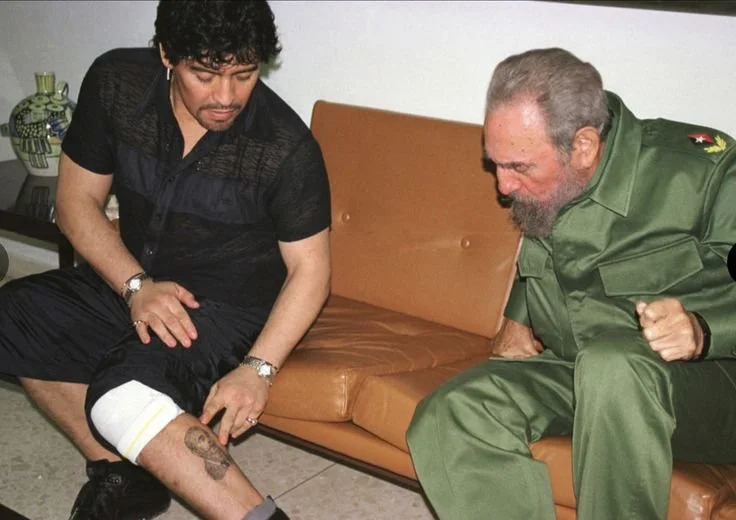
His final years were marked by illness and retreat from public life. In 2008, he formally handed power to his brother Raúl. Eight years later, on November 25, 2016, Fidel Castro died at the age of 90, closing the chapter on an era that had shaped—and scarred—millions.
As the longest-serving non-royal head of state in the 20th and 21st centuries, Castro’s legacy is as fiercely debated as ever.
In Cuba, he is revered by many (especially older generations) as a symbol of national pride and resistance against imperialism. His admirers view him as a champion of socialism and anti-imperialism, a leader whose revolution delivered schools, doctors, and a sense of dignity and Cuba's independence from American hegemony.
His critics view him as a dictator whos administration oversaw human rights abuses, sparking the exodus of 2.9 million Cubans, and the impoverishment of the country's economy. The debate continues in academic, political, and cultural spheres, reflecting the complex nature of his impact.
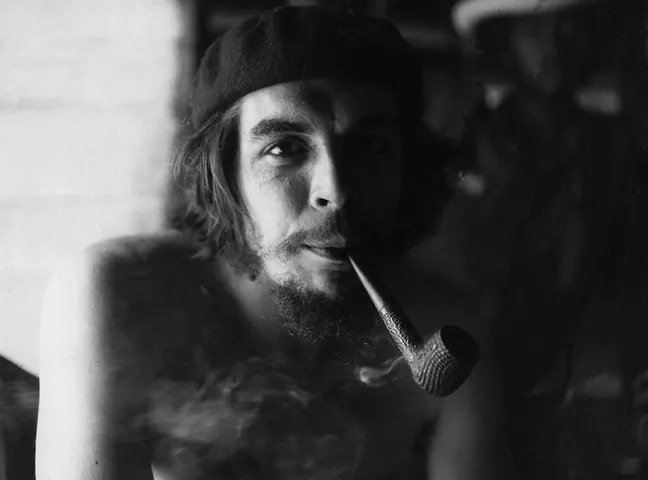
Reflecting on that day in Meckenheim, I realize that revolutions are rarely as simple as a T-shirt. To me they often seem to be lived in a tension between hope and disappointment - between the promise of freedom and reality of power. Castro’s life, like his legacy, is a study in contradiction: liberator and jailer, visionary and autocrat.
Question is - would you wear the shirt?